
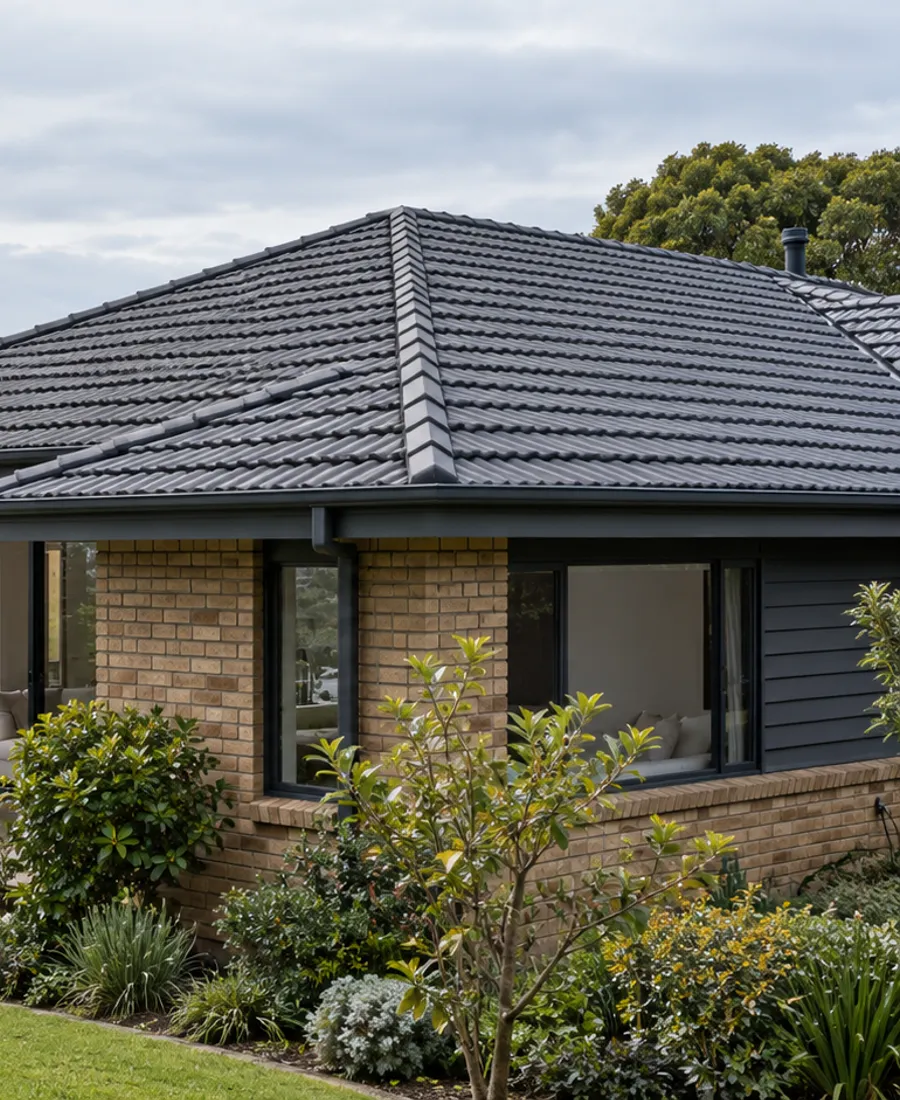
Rust runs on the walls below
Orange streaks on the cladding under a roof edge suggest corrosion above is shedding onto the wall. Photograph the streak and the edge above it.
Auckland / North Shore
Thoughtful preparation. A considered finish. Start with a conversation about your property.
Start with the surface
Planning Roof Painting Takapuna Beach starts with understanding your own roof rather than choosing a colour alone. Metal and concrete tile surfaces can need different preparation, and the existing coating, visible wear and repair history all matter. Tell us whether the roof is fading, flaking or showing signs of damage so the enquiry can focus on the work your property needs.
For a home, rental or shared building in Takapuna Beach, access and approval arrangements are part of the conversation. Include the number of storeys, any shared driveway or body corporate requirements, and photographs taken safely from the ground. Preparation, repair needs and a compatible coating system should be clear before work is agreed. Use the form to describe your roof, or call to discuss an assessment and a practical next step.
Sea-air exposure
A roof at the beachfront is not worn evenly. Different parts take different punishment, and each one raises its own question for the brief.
Wind drives up and over exposed edges, so coatings along the eaves and gable ends are often the first to lift. Photograph the edges from the ground and say where peeling starts.
Salt can settle around screws and overlapping joints, where rust staining often shows first. A brown streak below a fixing matters more than general fading. Ask how corroded fasteners are handled before any coating.
Windblown sand and grit can collect in gutters and on lower roof sections, holding moisture against the metal. Ask for gutters and fascia to be looked at alongside the roof surface, not after it.
Dried spray can leave a film that new coatings do not grip. Ask how the surface will be cleaned, and how any salt deposit changes the primer choice, before you agree a colour.
Restore or recoat
A roof close to the sea can weather harder than a sheltered one, but the address alone does not decide what it needs. Judge two things separately: the condition of the material itself, and the condition of the finish on top of it.
A sound roof with a tired coating may need only cleaning, preparation and a compatible recoat. Corroded sections, failed fixings or active leaks need repairs first. A written scope should keep the two apart and name the primer and topcoat, so quotes can be compared fairly.
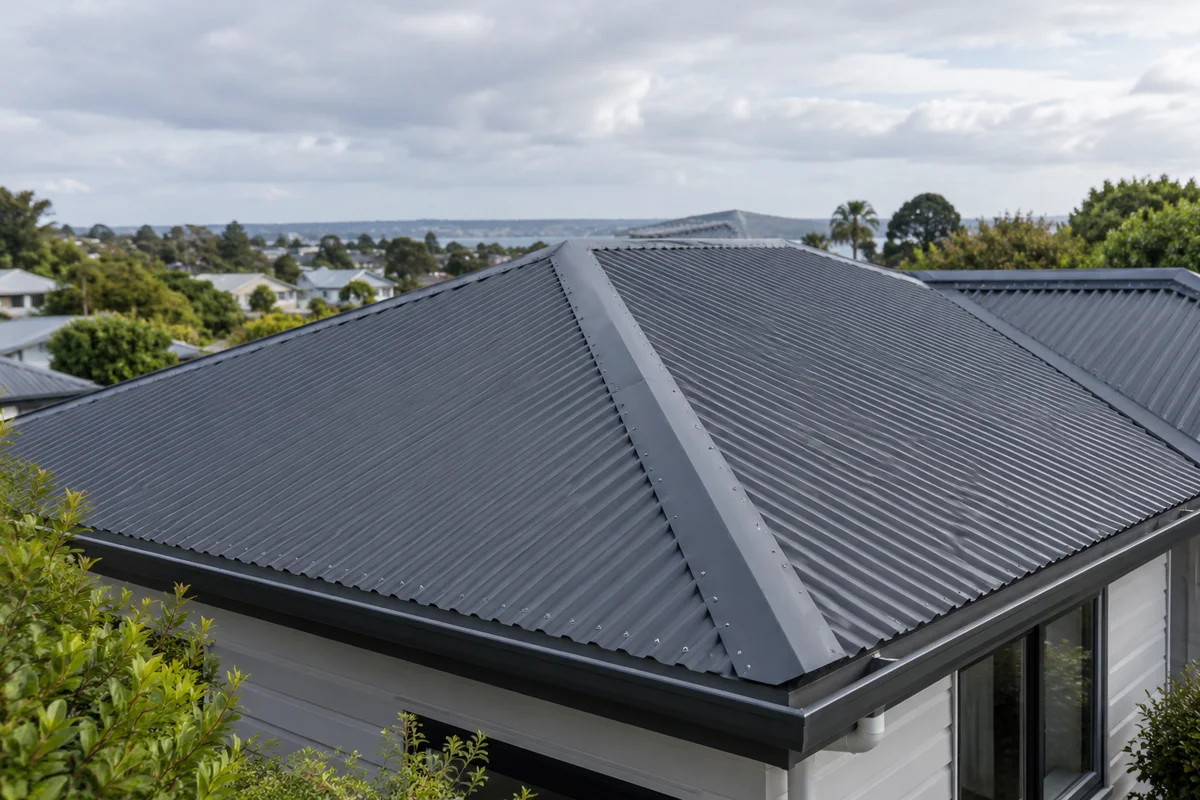
Ground-level warnings
All of these can be seen from the ground. Please do not climb up for a closer look.
Orange streaks on the cladding under a roof edge suggest corrosion above is shedding onto the wall. Photograph the streak and the edge above it.
Water that gets in only when rain arrives hard from one direction points to an edge, a flashing or a fixing. Note the date and the weather. A coating will not cure a leak.
A roof that rattles or seems to lift in strong wind may have loose fixings or damaged edges. Describe what you hear and when. Stay off the roof.
Chips and grit collecting at the bottom of the gutter show the coating is breaking down. Photograph what you can see from the ground and leave the rest for the assessment.
Beachfront rule of thumb
Sea air, wind and sand work on the places where a roof is joined, fixed or exposed. A fair quote names those places, says what will be repaired and what will be coated, and explains how salt is dealt with first.
Roof cleaning for salt-affected surfacesBeyond the beachfront
The wider beachside centre, where apartments and townhouses near the beach bring shared-roof questions.
Another coastal suburb where salt exposure in places is part of the conversation about gutters and fascia.
A peninsula with sea on several sides, where older coatings add their own questions.
Salt film and growth have to come off first, in a way that suits the roof material.
Where corrosion or failed fixings turn up, repairs are listed before a compatible coating goes on.
Gutters at the roof edge take the same wind and salt, and a leaking joint is repair work, not painting.
Exposed-roof enquiry
Photos of the roof edges, any rust staining and the gutter run give the best starting point, all taken from the ground. Add your address and storeys. Call 09 977 9907 or use the form.