
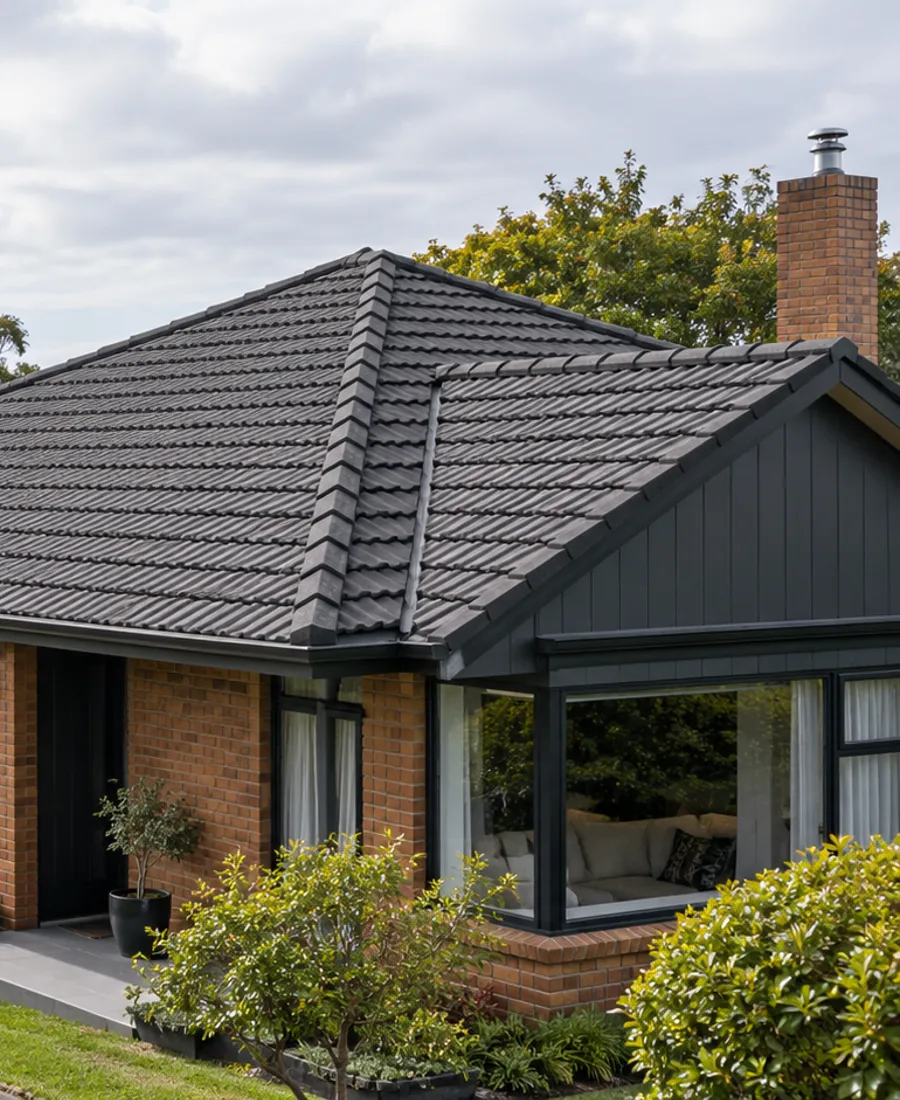
The roof drips downwards
Roof cleaning and coating shed water, debris and dust onto whatever sits below. Walls painted first can be marked or need touching up afterwards. Doing the roof first lets the wall finish be the last thing applied.
Auckland / North Shore
Thoughtful preparation. A considered finish. Start with a conversation about your property.
Start with the surface
Planning Roof Painting Belmont starts with understanding your own roof rather than choosing a colour alone. Metal and concrete tile surfaces can need different preparation, and the existing coating, visible wear and repair history all matter. Tell us whether the roof is fading, flaking or showing signs of damage so the enquiry can focus on the work your property needs.
For a home, rental or shared building in Belmont, access and approval arrangements are part of the conversation. Include the number of storeys, any shared driveway or body corporate requirements, and photographs taken safely from the ground. Preparation, repair needs and a compatible coating system should be clear before work is agreed. Use the form to describe your roof, or call to discuss an assessment and a practical next step.
Exterior sequence
Older and newer homes sit side by side here, and the roof is only one part of the exterior. The order the parts are done in decides how clean each one ends up.
Roof cleaning and coating shed water, debris and dust onto whatever sits below. Walls painted first can be marked or need touching up afterwards. Doing the roof first lets the wall finish be the last thing applied.
Gutters, fascia and barge boards join roof to walls, and they are easy to leave out of both quotes. Decide which job owns them, and ask for each one to be named in the written scope.
With the roof done and the gutters settled, walls, windows and trims can be prepared and coated without anything dropping from above. It also lets you judge wall colours against the finished roof instead of guessing.
Write down roof, fascia, wall and trim colours together, with sheen and product names. A single schedule makes later touch-ups and a second stage easier to match, even when different people do the work.
Roof colour
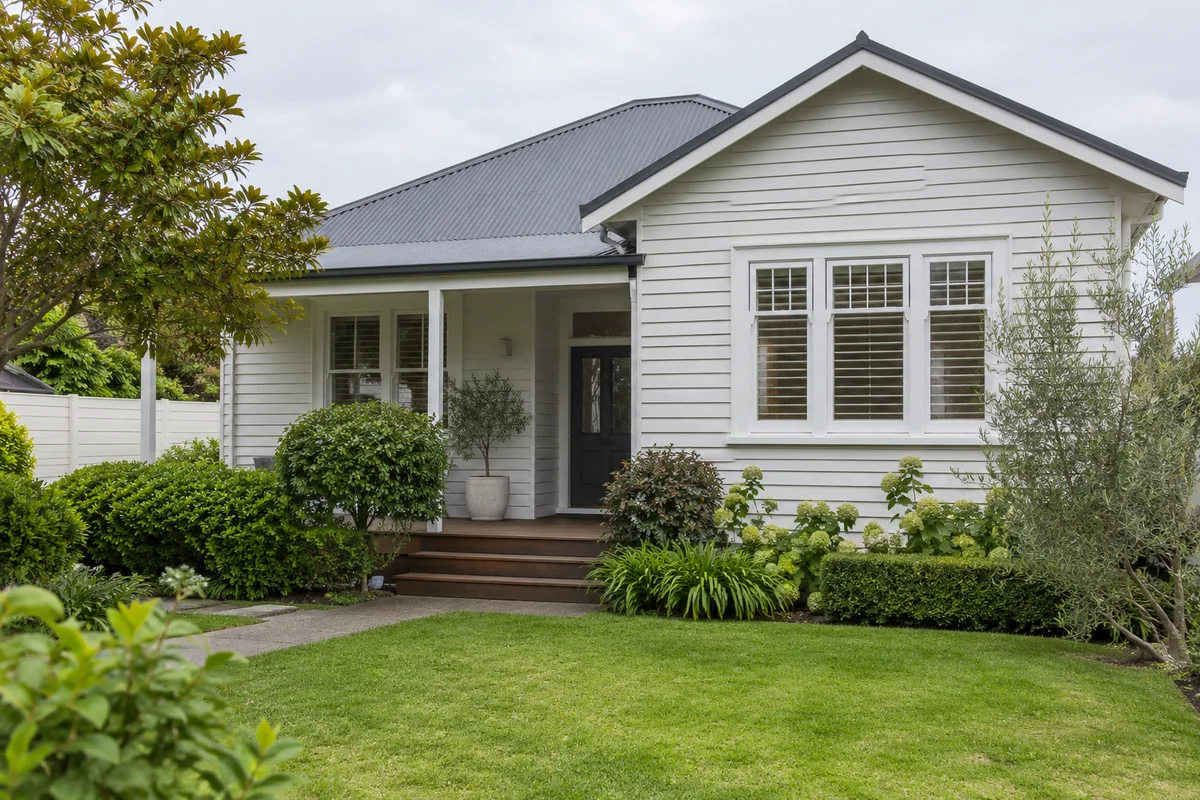
Roof and cladding read together. A darker or lighter roof can make existing wall colour look warmer, flatter or more tired, even though the walls have not changed. Older and newer homes often carry different cladding and trims, so the same roof colour can sit quite differently on each.
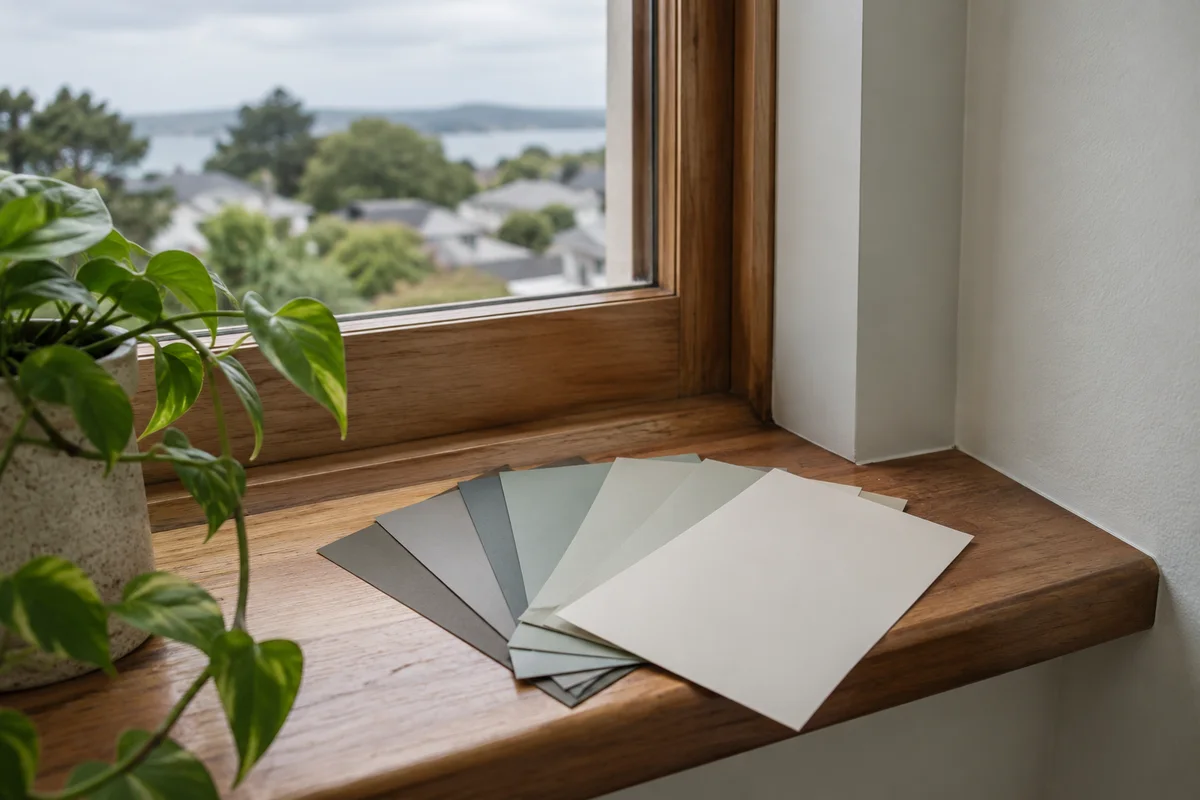
Test large samples against the cladding and joinery in morning light, evening light and shade. Look from the street and from the garden. Choose the roof colour with the walls in view, then write the codes down.
Scope options
A roof repaint rarely stands completely alone. These are the neighbouring jobs most worth pricing at the same time, or at least naming so they are not forgotten.
They carry everything the roof sheds. Ask whether cleaning, repair or replacement suits your gutters, and whether they are coated to match the roof.
Timber at the roof edge can show wear the roof itself does not. List each board in the scope and ask how soft or split areas will be handled.
A full repaint changes both the budget and the calendar. If you stage it, finish the roof first and keep the colour schedule so the walls can follow.
Roof work can leave dust and drips below. If outdoor timber is already due for attention, discuss doing it afterwards so it is not marked.
Often the right call for a sound roof on a home whose walls are fine. Ask for a quote that names the surfaces included, so nothing is assumed.
Beyond the roofline
Some of these cover neighbouring suburbs. The rest go deeper into the jobs that tend to sit beside a roof repaint.
Covers apartments and townhouses near the beach, which helps if the roof you are asking about has more than one owner.
Quiet harbour-side residential, with notes on wind-carried mist and wash water that apply to any exterior job near neighbours.
Walls, trims and joinery, for when the roof turns out to be the first stage of a bigger exterior plan.
Worn or leaking gutters are easier to sort out when the roof quote names them as a separate line.
For older roofs where repairs have to come before any coating, with the repair or recoat decision laid out.
Belmont exterior brief
Tell us whether this is the roof alone or the first stage of a wider exterior job. Send the address, a wide photograph of the whole house and any colour codes you already have.