
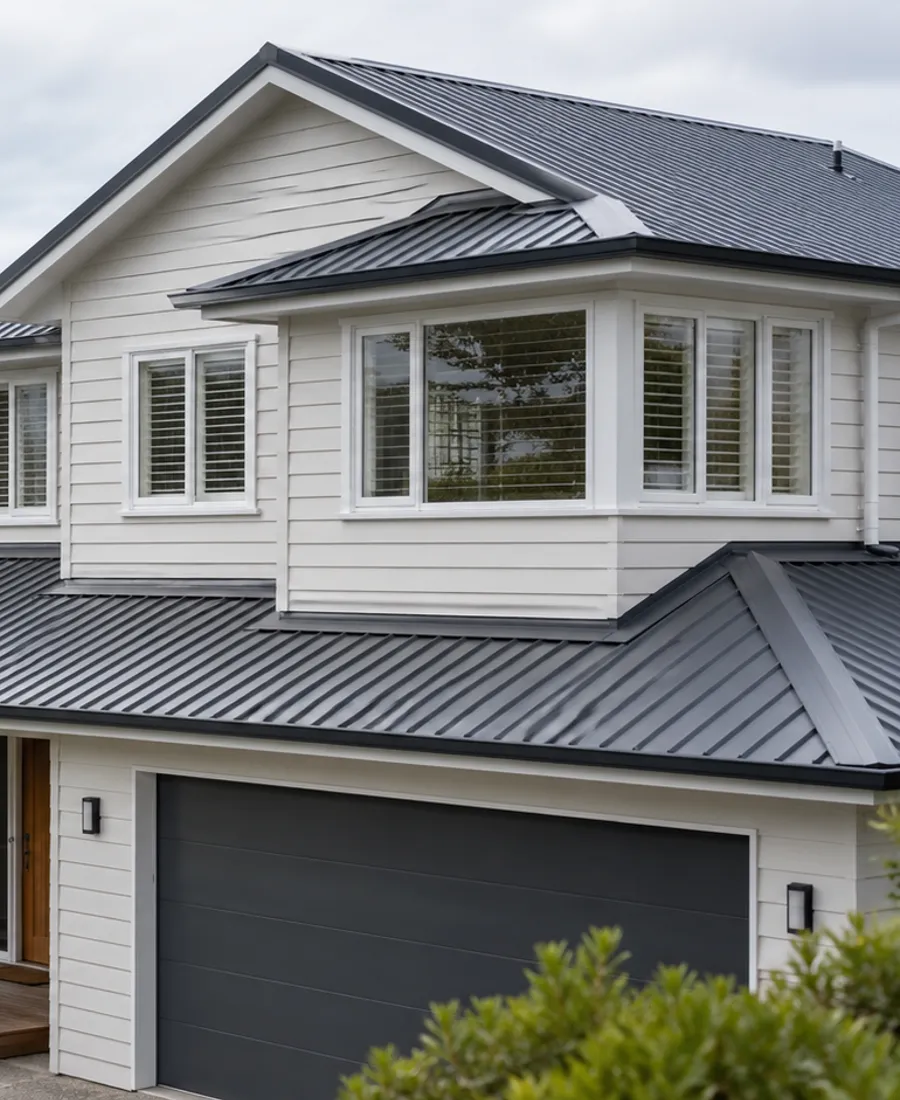
Ridge line
Where two slopes meet at the top. Ask how the capping and its fixings will be checked and coated.
Auckland / North Shore
Thoughtful preparation. A considered finish. Start with a conversation about your property.
Start with the surface
Planning Roof Painting Long Bay starts with understanding your own roof rather than choosing a colour alone. Metal and concrete tile surfaces can need different preparation, and the existing coating, visible wear and repair history all matter. Tell us whether the roof is fading, flaking or showing signs of damage so the enquiry can focus on the work your property needs.
For a home, rental or shared building in Long Bay, access and approval arrangements are part of the conversation. Include the number of storeys, any shared driveway or body corporate requirements, and photographs taken safely from the ground. Preparation, repair needs and a compatible coating system should be clear before work is agreed. Use the form to describe your roof, or call to discuss an assessment and a practical next step.
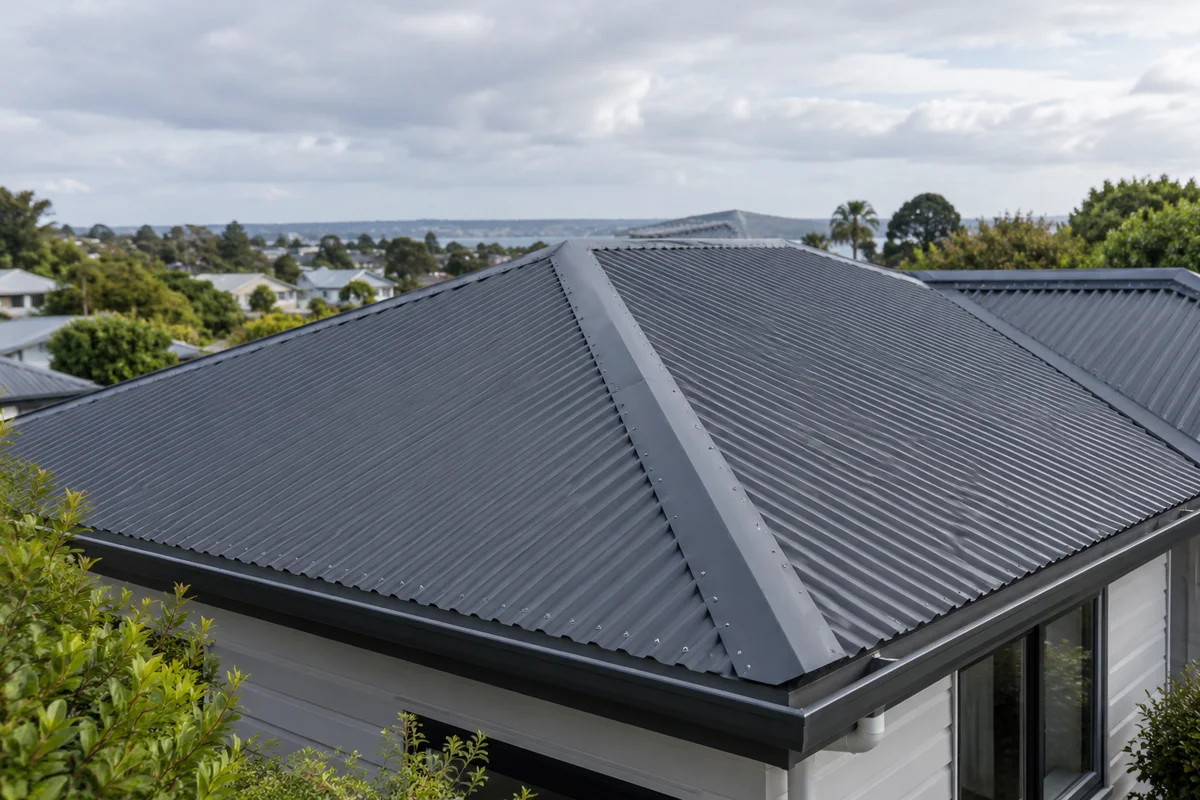
Finding the facts
Records for a newer roof are often scattered across folders and inboxes. Work through them in this order.
Look through builder documents, product sheets, invoices and emails from when the roof went on. Photograph anything showing a product name, colour name or code.
Note whether it is metal or tile, the profile and the colour name. Ground-level photos, including a close view of a visible edge, can fill gaps in the paperwork.
Ask whether repainting that finish is supported and what preparation they would expect. Get the answer in writing, including any effect on warranty terms.
Share the papers with whoever assesses the roof, so the proposed primer and topcoat are checked against the actual finish rather than guessed from its age.
Exposed roof parts
Open exposure puts extra strain on edges and joins. These are the parts worth pointing out when you describe the property.
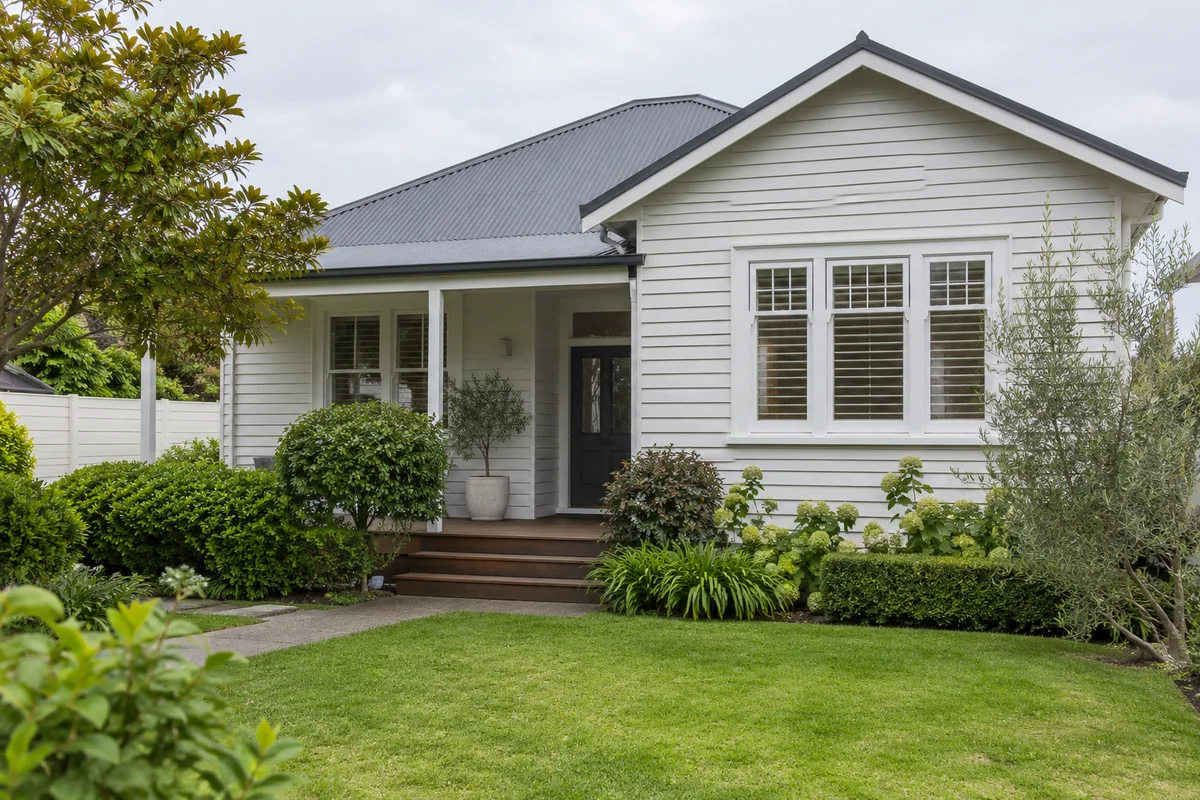
Where two slopes meet at the top. Ask how the capping and its fixings will be checked and coated.
The outer edges take the most direct weather. From the ground, look for lifted coating or loose trims here.
Heads, laps and joins can loosen over time. Coating over a loose fixing hides the fault instead of fixing it.
The roof's lowest edge. Streaks or sagging here point to water issues that sit beside the coating question.
Northern bays
A fellow northern bays suburb where older homes and newer builds mix; covers how to describe a roof section added later.
A northern hub with newer subdivisions, relevant if you also look after a newer rental or a townhouse roof.
Primer and topcoat must suit the finish already on the roof, which is the heart of the factory-finish question.
The sequence of cleaning, repairs, priming and topcoat, for owners who decide repainting does suit their roof.
A sound finish sometimes needs only cleaning; this explains what to ask about the method.
Gardens and boundaries
New planting and tight boundaries leave little room for equipment or runoff. Plan for that before the first day.
List planting, fences, paving and vehicles beside the house, and any shared boundary with a neighbour. Note any rules from whoever manages the property that limit where equipment can go.
Agree who moves pots and furniture and what gets covered. Fresh landscaping is easily marked by cleaning runoff or drips, so protection belongs in the scope, not in an afterthought.
Check beds, fences, paving and neighbouring surfaces for marks before signing off. Raise anything straight away, while the work is fresh and the cause is easy to trace.
Long Bay roofs
Send ground-level photos with whatever you hold on the roof: product name, colour, installer details. Call 09 977 9907 or use the form, and we can help work out whether cleaning, repair or repainting fits.