
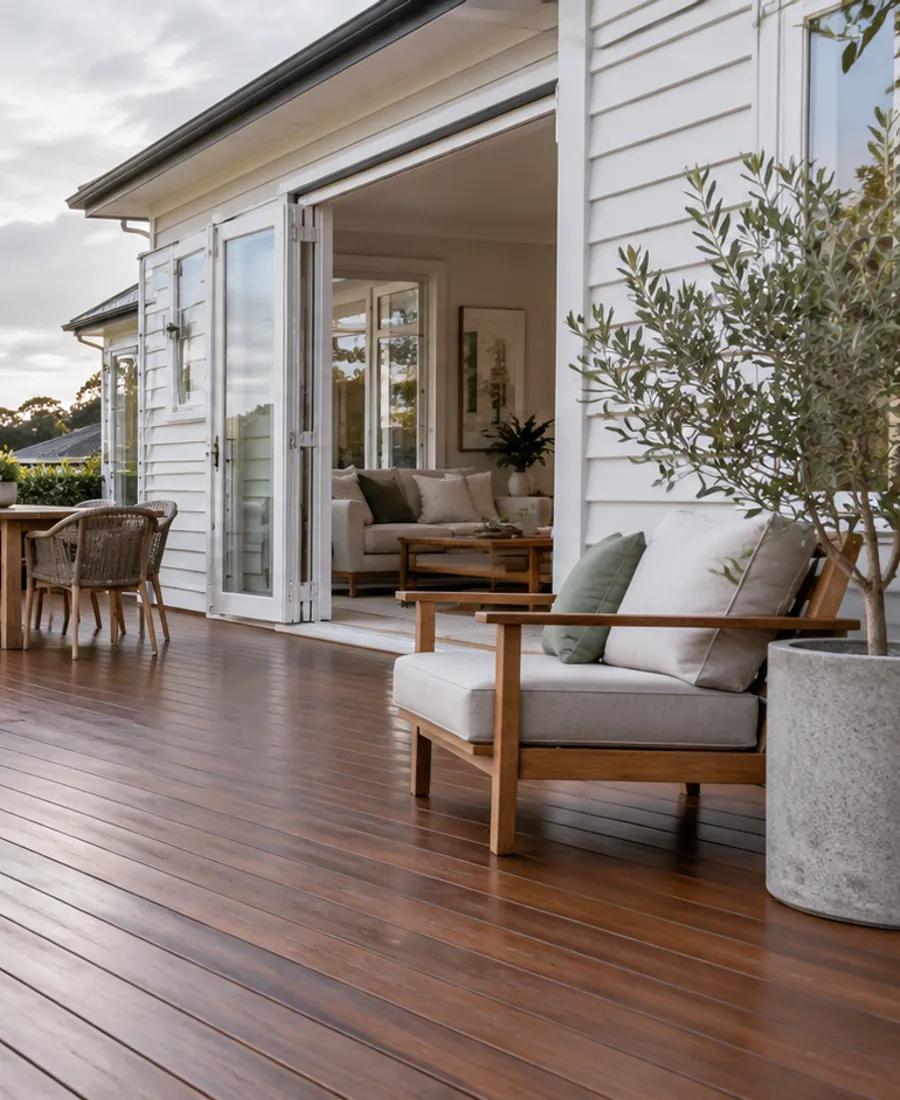
Bare paths to the door
Walkways to the door, the barbecue and the steps lose their finish first. Grey, bare timber along those lines means water is already getting in.
Auckland Roof Painting Pros
Thoughtful preparation. A considered finish. Start with a conversation about your property.
Start with the surface
Our Auckland Deck Painting service starts with the property and the surfaces involved. For deck painting, the important considerations include foot traffic, timber moisture and previous deck treatments. Understanding the existing material, coating and condition helps define the right preparation before a finish is selected. Tell us about visible wear, previous work and any areas that need particular attention.
A useful proposal should set out the surfaces included, preparation, any agreed repairs, the coating system and access arrangements. Timing also needs to allow for suitable application and drying conditions. Share your address, photographs and preferred timing through the enquiry form, or call to discuss the project. We can then clarify the details that need assessment and the next step for your property.
Wear to watch
Most decks show the first signs along the paths people walk every day.
Walkways to the door, the barbecue and the steps lose their finish first. Grey, bare timber along those lines means water is already getting in.
Splashes that darken the boards instead of sitting on the surface often mean the finish has stopped doing its job. Check a few spots after rain.
Slimy patches in shade are a slip risk and a sign of lasting damp. Cleaning is part of the job; the cause, such as shade, drainage or planting, is worth discussing.
Soft spots, splitting, cupped boards and raised fixings are repairs, not cosmetics. Raise them before colour, as a coating will not hold them down.
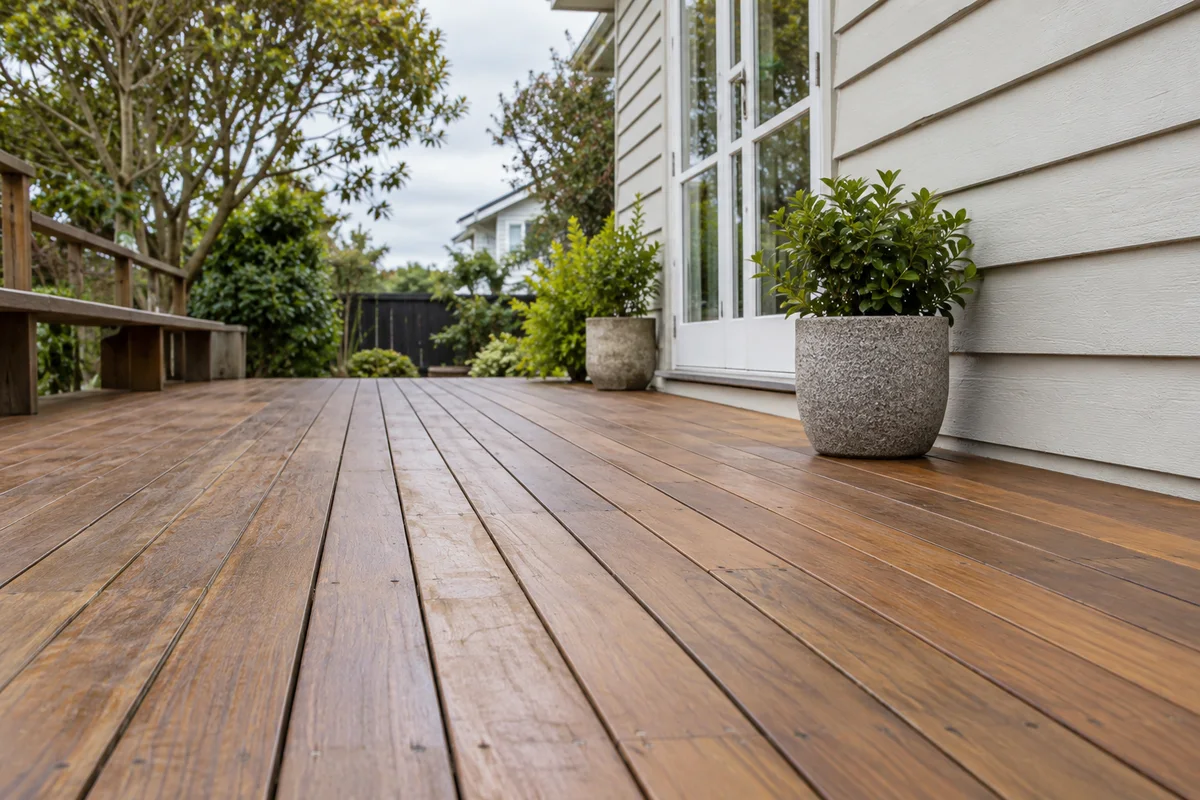
Deck timber
Deck boards lie flat, so rain, sun and footsteps all land on the same surface. The timber species, its age and whatever was applied before decide what will work now. If you can tell the painter whether the deck was oiled, stained or painted, the preparation can be planned honestly.
Around the deck
A deck rarely stands alone. The structures and walls around it share its weather and often its colour scheme.
A pergola over the deck adds overhead work and drip protection that need planning alongside the boards.
Deck and fence often meet at the same boundary and share garden beds, drying conditions and access.
Where the deck meets house walls, cladding and railings are best coated to one plan.
Old stain, oil or peeling film on boards may need stripping before anything new can bond.
A coating made for foot traffic is a different product system from wall paint, so choose with the surface in mind.
Steps and rails
Stair nosings, handrail tops and balustrade posts are touched and stepped on more than any other part of the deck, and a loose rail is a safety issue before it is a paint issue. Anything wobbly should be repaired first by the right trade. Then each edge can be prepared and coated on its own terms.
Send photos of your stepsFront edges of treads wear and catch water. Look for rounded, bare or splintering edges.
Hands and sun wear the top rail fastest. Flaking or rough spots show up under a palm.
Posts that move or bolts with rust stains point to repair work, not painting.
Deck close-ups
What good preparation looks like at board level.
Board faces cleaned back to sound timber
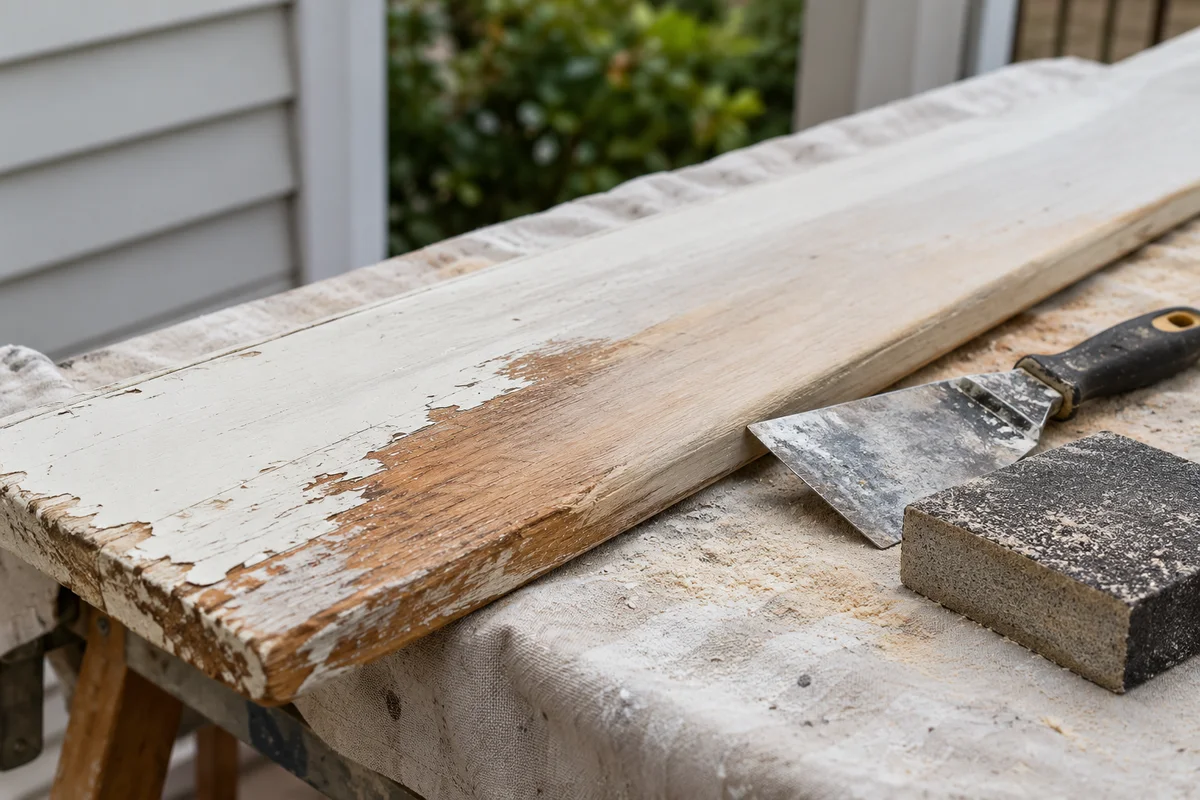
Old finish removed where it will not take a new one
Sunny and shaded patches that dry at different rates
Gaps and edges where water drains away
Drying before use
The deck is out of action for longer than the painting itself. Plan the waiting as carefully as the work.
Boards are cleaned and left to dry before coating, because trapped moisture can spoil the finish. Ask how dryness is judged on your deck.
Loose boards and raised fixings are dealt with. Old finishes that will not accept a new coat are sanded or taken off.
Coats go on working back toward the way off, so nobody is left stranded and the freshest section is never walked across.
A finish can feel dry before it is ready for furniture and feet. Get the waiting period for your product in writing, and keep pets and children off.
Record the product and colour, then ask how often the deck should be washed and checked. Maintenance depends on use and exposure.
Deck enquiry
Share the timber if you know it, the last treatment and where the wear is worst. Photos of the boards, steps and rails taken from the ground are enough to start.