
Old invoices
A painter's or roofer's invoice may name the product, the colour and the date of the last coating.
Auckland / North Shore
Thoughtful preparation. A considered finish. Start with a conversation about your property.
Start with the surface
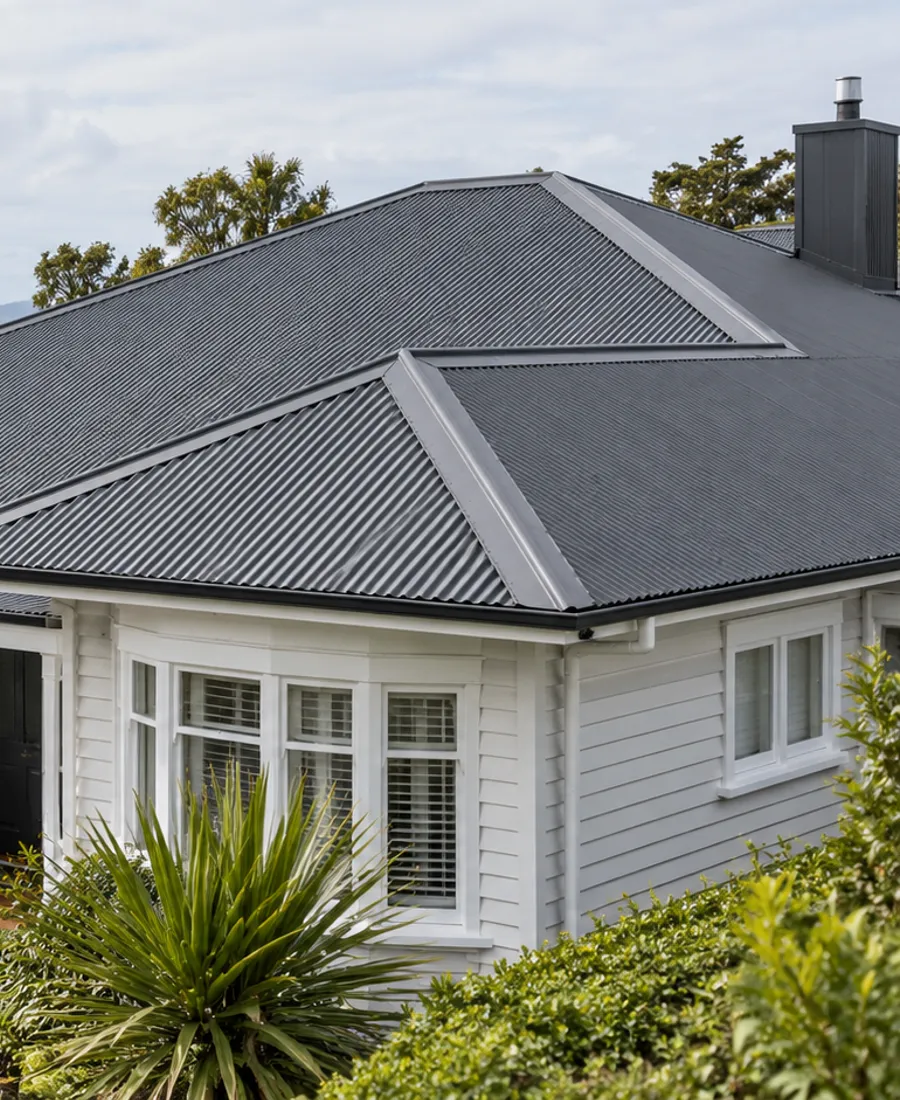
Planning Roof Painting Mairangi Bay starts with understanding your own roof rather than choosing a colour alone. Metal and concrete tile surfaces can need different preparation, and the existing coating, visible wear and repair history all matter. Tell us whether the roof is fading, flaking or showing signs of damage so the enquiry can focus on the work your property needs.
For a home, rental or shared building in Mairangi Bay, access and approval arrangements are part of the conversation. Include the number of storeys, any shared driveway or body corporate requirements, and photographs taken safely from the ground. Preparation, repair needs and a compatible coating system should be clear before work is agreed. Use the form to describe your roof, or call to discuss an assessment and a practical next step.
Under the topcoat
Homes here come from several eras, so their roofs do too. One may carry its original finish, another several later coats, a third a patched mix after a renovation. What already sits on the surface decides which primer and topcoat will bond, which is why a fresh colour is never the first question.
Appearance is a poor guide. Two coatings can look identical and behave differently, and a faded surface may be chalking underneath. A careful assessment checks condition and adhesion before a system is chosen, and the quote should say how.
Finding the records
You do not need a full record. Any one of these can save a round of guessing.
A painter's or roofer's invoice may name the product, the colour and the date of the last coating.
A tin in the garage can carry the product name, colour and sheen. Photograph the label, including any batch details.
Documents from a renovation or extension can show when a roof section was added or replaced, and what it is made of.
Photos from when you bought the house can show earlier colours, and whether one section is newer than the rest.
A former owner, neighbour or agent may remember when the roof was last done and by whom. A rough date is still useful.
Height and balconies
Many homes here sit on sloping sections with sea views, which can mean upper floors, balconies and decks. Each one changes how the roof is reached and what needs protecting.
An upper storey puts the roof edge further from the ground, and on a slope the drop can be greater on one side. Tell us how many levels the house has and which side is highest, so access can be planned before the quote is priced.
A balcony or deck can sit directly beneath the roof edge and limit where equipment can stand. Furniture, glass and railings need protecting, and you may be asked to clear the space yourself ahead of time.
Gaps between houses can be tight, and on a slope they are often stepped. Photograph the narrowest point between the street and the back, and mention any gates, bins or meter boxes along the way.
On a hillside, the easiest route to the roof may run along someone else's fence. If so, talk to the neighbour early and tell your painter what has been agreed.
Four roof histories
The right first question depends on what has already happened to the roof.
| Aspect | First thing to ask | What to send |
|---|---|---|
| Original roof, never recoated | Is the original finish still sound, or is it breaking down? | Close-ups of any chalking, rust or fading, plus the roof material. |
| Recoated at least once | What is on it now, and will a new system bond to it? | Invoices, tin labels or a colour name, whatever has survived. |
| Part replaced or extended | Do the old and new sections need different preparation? | A wide photo showing the join, plus the date of the work if known. |
| Newer roof, factory finish | Is repainting appropriate for this finish at all? | Builder or supplier information on the roof product. |
Coastal roof questions
These come up often when a bayside roof has been through a few owners.
Say so. Records help but they are not essential. A painter can assess condition and check how well the existing coating is holding, though the result is only as good as the checking, so ask how it will be done and what the findings could add to the quote.
Often, if the sheets or tiles and the fixings are sound. A roof with advanced corrosion, cracked tiles or active leaks needs repairs first, because a coating does not replace damaged material. A written assessment should separate repair work from recoating.
Salt exposure is one factor among several, alongside preparation, the coating system and ongoing care. Ask how salt deposits will be washed off before priming, which product system is proposed and what inspection routine suits your roof. Nobody can promise a lifespan from the suburb alone.
You should. Ask for product names, colours, sheen and application details in writing, and file them with your property records. If you sell or hand the house to a manager, that file makes the next assessment far easier.
Other bayside suburbs
Other East Coast Bays suburbs bring their own angle on salt, slopes and access. The service pages cover the decisions that follow an assessment.
Concentrates on sloping ground, sea-facing decks and the photographs that make an enquiry easy to assess.
Looks at which parts of a roof wear differently, and at keeping a household or tenancy running through the work.
Another East Coast Bays beach suburb with sloping sections and salt air to plan around.
When the assessment finds more than a faded coating, this covers repairs first and a compatible coating after.
A new system has to suit what is already on the roof, and this explains how primer, topcoat and sheen fit together.
Mairangi Bay roof enquiry
Share any invoices, tin labels or builder's notes you can find, plus a few photographs from the ground. Where records are missing, tell us that too. It shapes what needs checking first.