
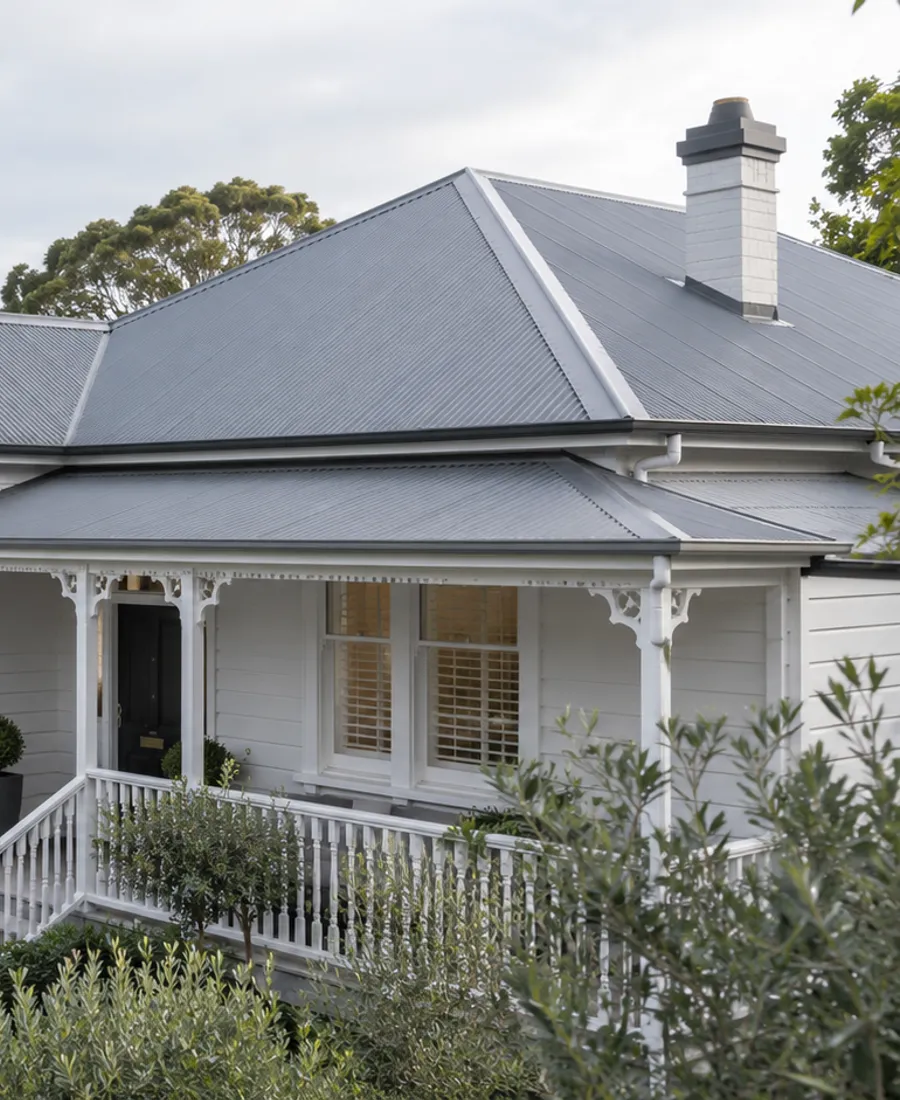
Before
Spot it from the ground
Photograph the stain where it shows, plus a wider view that places it on the roof. Note whether it follows a line of fixings, sits at an edge or only appears after rain. Do not climb up for a closer look.
Auckland / North Shore
Thoughtful preparation. A considered finish. Start with a conversation about your property.
Start with the surface
Planning Roof Painting Murrays Bay starts with understanding your own roof rather than choosing a colour alone. Metal and concrete tile surfaces can need different preparation, and the existing coating, visible wear and repair history all matter. Tell us whether the roof is fading, flaking or showing signs of damage so the enquiry can focus on the work your property needs.
For a home, rental or shared building in Murrays Bay, access and approval arrangements are part of the conversation. Include the number of storeys, any shared driveway or body corporate requirements, and photographs taken safely from the ground. Preparation, repair needs and a compatible coating system should be clear before work is agreed. Use the form to describe your roof, or call to discuss an assessment and a practical next step.
Fixings and edges
Rust-coloured marks below a line of fixings or along a roof edge are worth separating from general fading. Keep the two as different items from the first photo to the final record.
Photograph the stain where it shows, plus a wider view that places it on the roof. Note whether it follows a line of fixings, sits at an edge or only appears after rain. Do not climb up for a closer look.
Assessment decides which marks are surface wear and which are damage to the material itself. Damage needs its own repair item before any primer or topcoat goes on, because paint cannot stand in for it.
Ask for a record of which fixings, edges or sections were repaired and what was applied. If a stain comes back in the same spot, that record shows whether it is new damage or the old problem resurfacing.
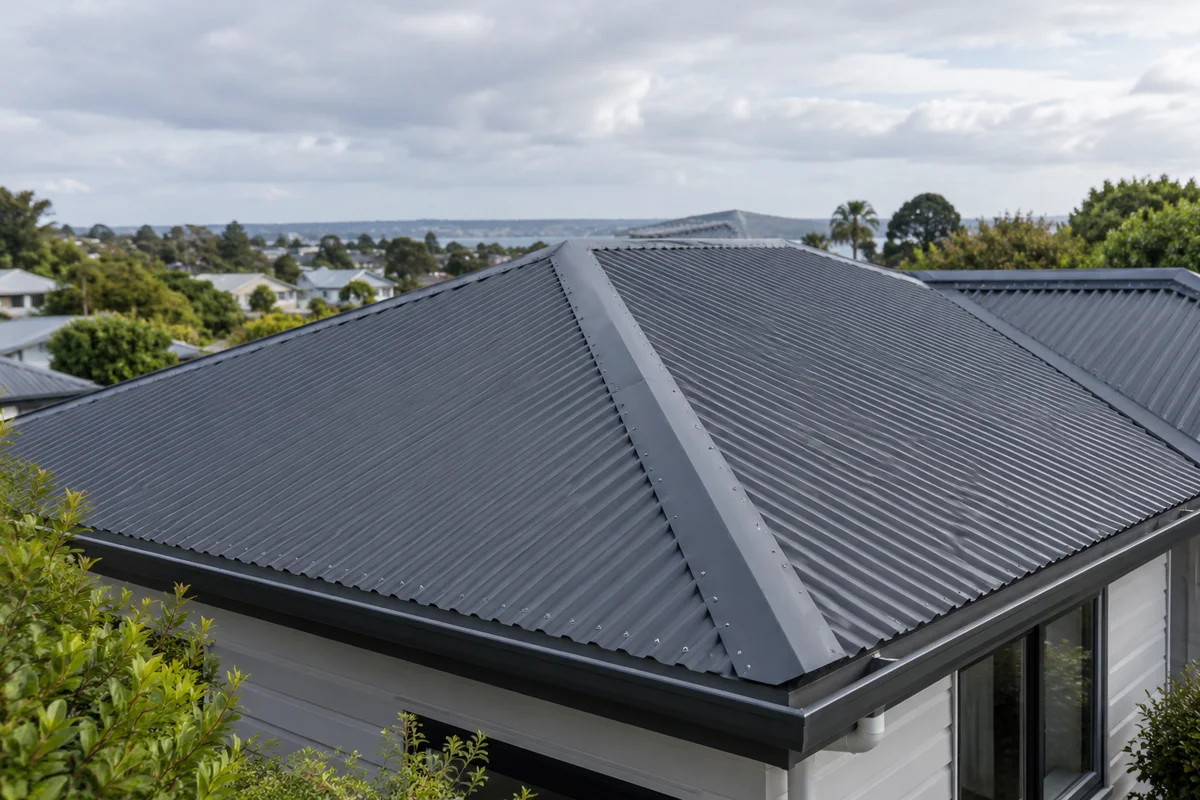
Salt and the paint film
Near the beach, salt in the air can settle on a roof alongside dirt and growth. A new coating bonds to whatever lies underneath, so the order of work matters more than the colour. Clean the surface, repair what is damaged, prime where the material needs it, then apply a topcoat that suits both the primer and the roof.
Steep ground, safe access
A section that drops towards the street or the view can leave one side of the house much higher than the other. Say which side that is, and show it in a photo taken from the lower ground. Ladders and equipment need firm, level footing, and a slope seldom offers it where the work is.
If a deck, balcony or raised terrace sits beneath the roofline, mention it. It can limit where equipment stands, and it needs covering so that cleaning runoff and coating do not land on the boards or the furniture on them.
Steep banks, retaining edges, soft garden beds and narrow side paths may rule out equipment placement. Mark them on a quick sketch or photo. A realistic access plan is far easier to agree beforehand than to improvise on the day.
Sloping approaches also decide where a vehicle can park and how materials reach the house. Describe the driveway, steps or path from the street to the building, and any gate or turning space a delivery would have to use.
Mixed eras
Houses around the bays come from several eras, and one roof can carry more than one of them. An older main roof may sit beside a newer extension, a garage added later or a section replaced after damage. Each part can have its own material and its own coating history.
Walk around the outside and list every roof section you can see from the ground. Note what you know about each one: when it was done, who did it, any paperwork. Where you know nothing, say so. An honest gap is more useful than a guess.
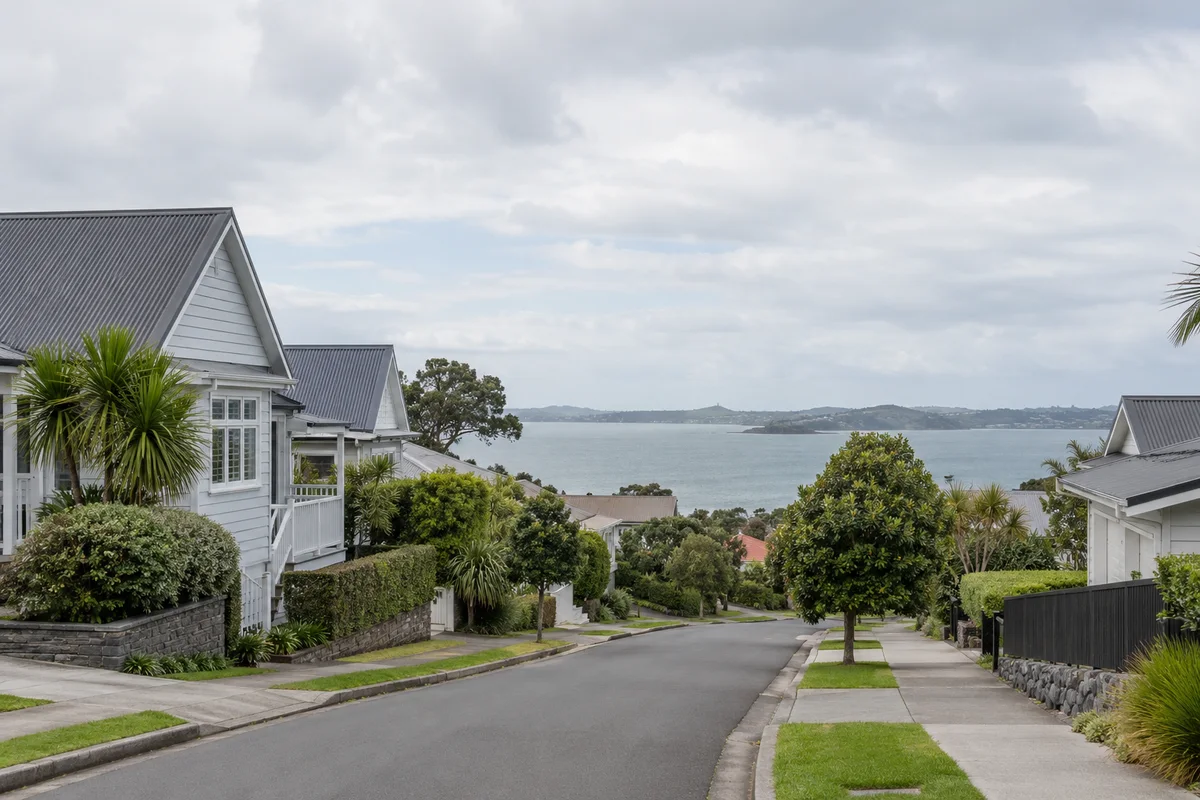
Neighbouring bays
Other beach suburbs raise similar fixings and edge questions, and the services below cover what an assessment can lead to.
Covers how to describe flaking, chalking and blistering so the preparation can be judged.
A beach suburb in the same run of bays, useful if you look after a second property along this coast.
Where rust, edge damage and a worn coating all show up together, restoration keeps the repairs apart from the recoat.
A stain at the roof edge may trace back to the gutter run rather than the roof surface, so check both together.
Salt deposits and growth come off before any primer goes on; this covers methods that suit the roof material.
Coastal roof terms
A short glossary for words that come up when a roof near the sea is assessed.
Comparing proposals
Two proposals only compare when they describe the same work. This order helps make that happen.
Give every company you ask the same set of ground-level photos and the same description of the roof, so each quote starts from one set of facts.
Fixings, edges and flashing should appear as their own lines, apart from cleaning and coating. Then a repair-heavy scope is not mistaken for a paint-only one.
Look for the primer, topcoat and any sealer named in writing. Two quotes with different systems are different jobs, even when the colour is the same.
Cleaning can expose more damage. Find out how it will be reported to you and who approves any added work before it goes ahead.
Request product names, the colour and care instructions, plus any warranty terms, in writing so they can go into your property file.
Murrays Bay roofs
Photograph any rust marks, the roofline and the ground around the house from safe positions. Then use the form or call 09 977 9907 (Mon-Fri 8am-6pm, Sat 9am-1pm) to describe the roof.