
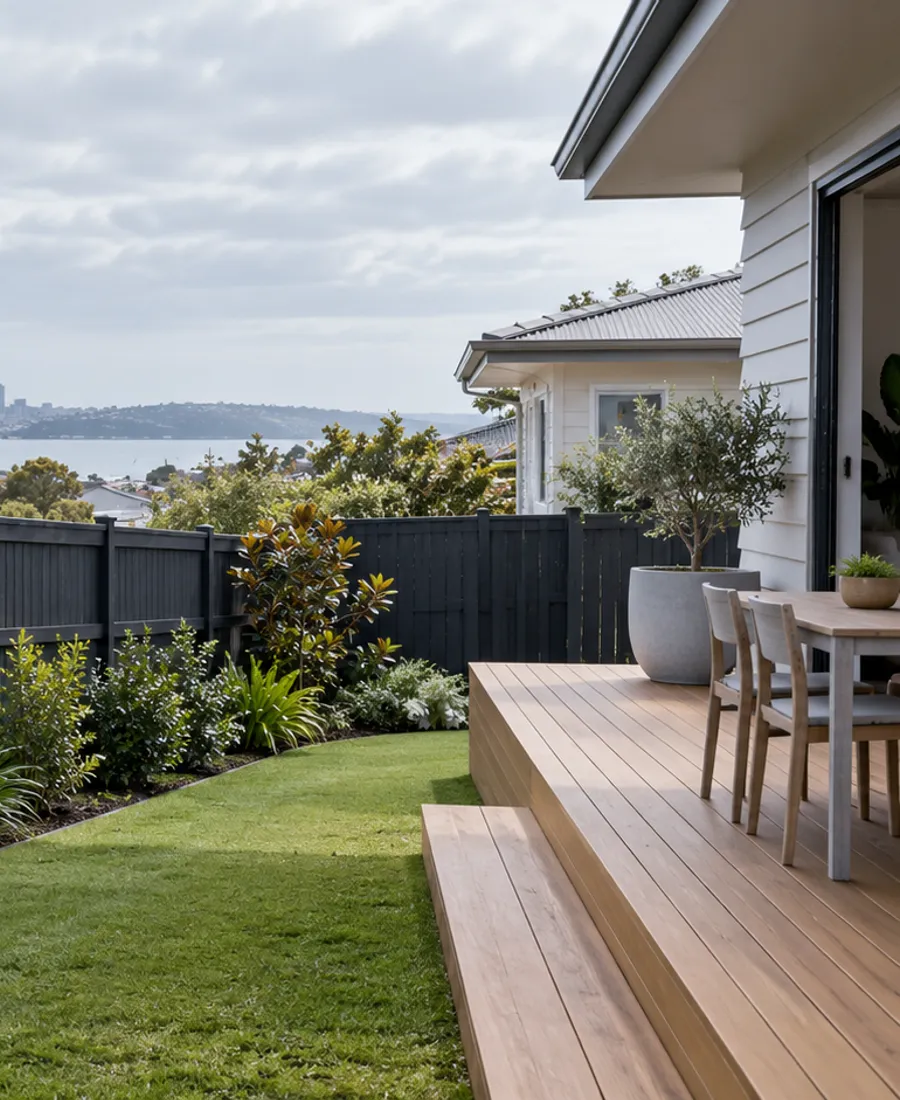
Plants against the boards
Shrubs and climbers hold moisture on the timber and block access. Agree what is cut back, tied away or covered.
Auckland Roof Painting Pros
Thoughtful preparation. A considered finish. Start with a conversation about your property.
Start with the surface
Our Auckland Fence Painting service starts with the property and the surfaces involved. For fence painting, the important considerations include timber weathering, boundary access and coating coverage. Understanding the existing material, coating and condition helps define the right preparation before a finish is selected. Tell us about visible wear, previous work and any areas that need particular attention.
A useful proposal should set out the surfaces included, preparation, any agreed repairs, the coating system and access arrangements. Timing also needs to allow for suitable application and drying conditions. Share your address, photographs and preferred timing through the enquiry form, or call to discuss the project. We can then clarify the details that need assessment and the next step for your property.
Shared boundaries
A fence has two faces and often two owners. Painting the far side can mean stepping into a neighbour's garden, so a friendly word beforehand matters more than any scheduling detail. Agree which faces, posts and rails are included, and who moves plants, bins and stored items.
If the fence is shared or its ownership is unclear, sort that out before asking for quotes. It changes what can be done from your side alone, and a quote that quietly leaves one face unpainted is not comparable with one that covers both.

Structure first
A rotting post or a loose rail still shows through a fresh coat. Repairs come first, and a good quote lists them separately so you can see what is paint and what is carpentry.
Timber and finish
What a fence needs depends on what is already on it. Find your timber below, then take the questions to your quote.
| Aspect | Typical preparation | Worth asking | Watch for |
|---|---|---|---|
| Bare, new timber | A system chosen for fresh timber and its moisture level. | Whether the boards need time before coating, and how that is judged. | Treated or green timber that is not ready to coat yet. |
| Previously stained | Cleaning, then a check that a new finish will bond over the old stain. | Whether a test patch can be done before the full run. | Patchy colour where old stain has worn unevenly. |
| Previously painted | Loose paint removed, edges blended and bare patches primed. | How failing areas and bare timber will be handled. | Peeling at the tops of palings, where water gets behind. |
| Grey, weathered boards | Cleaning back to a sound surface before any base coat goes on. | Whether extra coats or a different base suit thirsty timber. | Splits and raised grain that hold dirt and moisture. |
Weathering
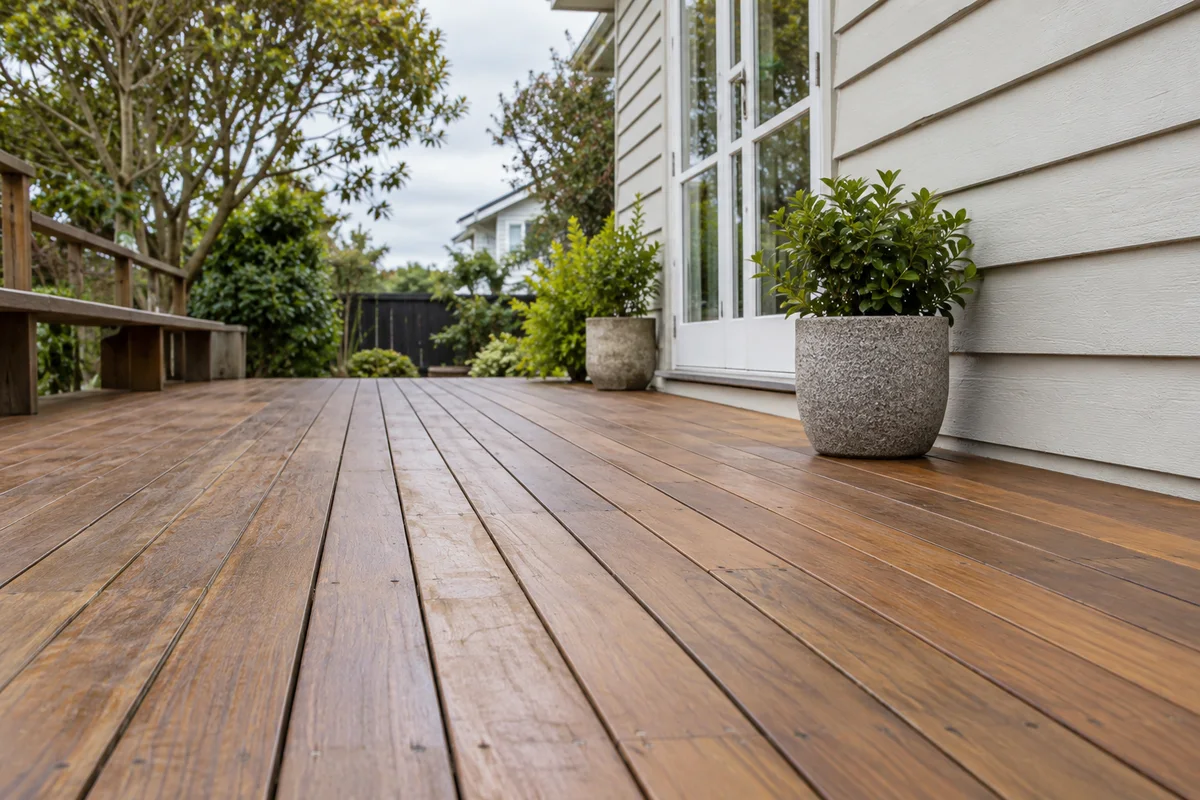
A fence weathers unevenly. One face bakes in the afternoon sun, the other stays shaded and damp, and every top edge collects rain. Seeing where your fence is worst tells you whether a tidy-up or a full preparation is needed.
Garden-side jobs
Fences, decks and pergolas often share a colour and a drying window, so their quotes can be lined up together.
A deck beside the fence often shares timber, finish and the same garden protection plan.
Overhead timber near the fence line adds access and cut-back questions best settled in one visit.
Where the fence ends against house walls, cladding and fence colours are judged together.
Solid paint or penetrating stain is a product-system choice, and the existing finish limits your options.
Garden protection
Most mess happens at the base of a fence. Settling these edges beforehand keeps beds, paths and plants out of the way.
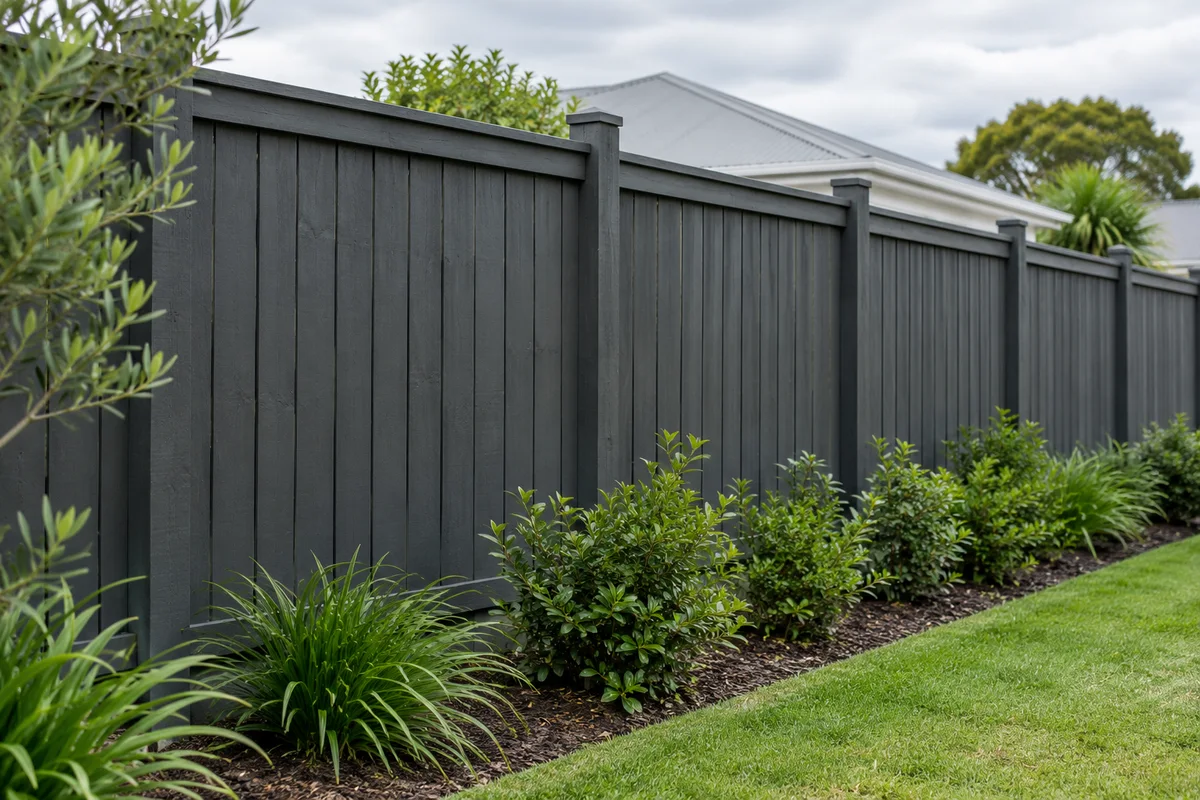
Shrubs and climbers hold moisture on the timber and block access. Agree what is cut back, tied away or covered.
Drips and overspray land here first. Ask how drop sheets and masking will be used along the base.
Irrigation can wet a fresh coating. Switch timers off for as long as the painter asks.
Gates, latches and boxes fixed to the fence need cutting in carefully and covering, so hardware is not painted by accident.
Fence enquiry
Tell us how long the run is, what finish is on it now and whether the far side needs neighbour access. Photos from the ground and your address are a good start.