
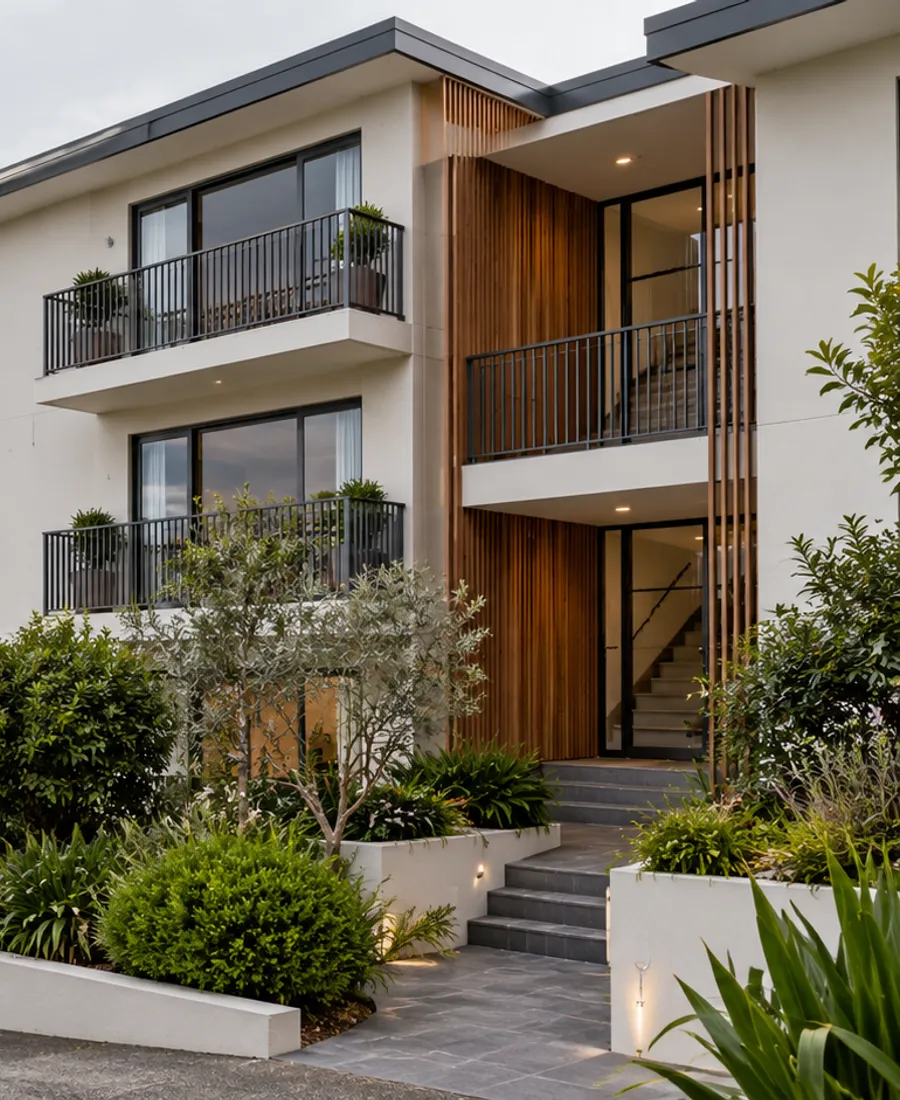
Entry and corridor edge
The corridor outside is shared. Door faces and frames may be restricted, and dust sheets must not spill onto common floors.
Auckland Roof Painting Pros
Thoughtful preparation. A considered finish. Start with a conversation about your property.
Start with the surface
Our Auckland Apartment & Unit Painting service starts with the property and the surfaces involved. For apartment & unit painting, the important considerations include shared access, compact rooms and body corporate requirements. Understanding the existing material, coating and condition helps define the right preparation before a finish is selected. Tell us about visible wear, previous work and any areas that need particular attention.
A useful proposal should set out the surfaces included, preparation, any agreed repairs, the coating system and access arrangements. Timing also needs to allow for suitable application and drying conditions. Share your address, photographs and preferred timing through the enquiry form, or call to discuss the project. We can then clarify the details that need assessment and the next step for your property.
Unit or building
Inside the front door the walls feel like yours, but the line between unit and building is not always where you expect. Which surfaces belong to the unit and which belong to the building depends on the title and the building's rules, so confirm it before you book anything.
Read about strata painting approvalsThe inside face may be yours. The outside face and the frame often sit under building rules.
Visible from outside, so colour and coating are often set for the whole building.
Frames and glazing can be shared or restricted. Ask before painting them.
Surfaces shared with neighbours need a clear answer on what you may change.
Before booking
These are best answered in writing, before a painter is booked.
Compact layout
In a small home every surface is close to the next. These are the parts to name in the scope.
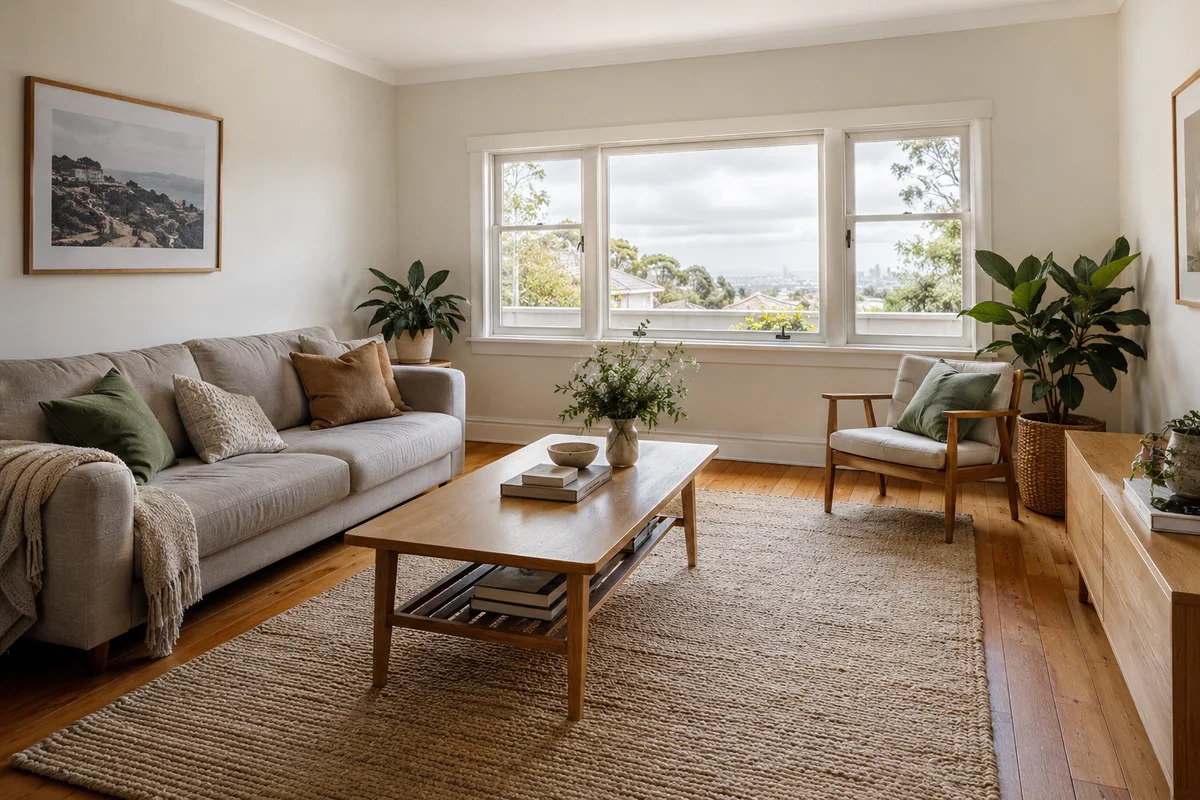
The corridor outside is shared. Door faces and frames may be restricted, and dust sheets must not spill onto common floors.
One continuous space means one colour decision across kitchen, living and hall, and few places to retreat while work goes on.
Exposed to weather and visible from outside. Rules on colour and coatings are most likely to apply here.
Small, damp and hard to ventilate while paint dries. Plan bathroom access and ask about finishes for humid spaces.
Warning signs
Some gaps in a proposal only show up on the day, when the lift is booked by someone else.
A scope that never refers to the body corporate, lift or work hours may be missing steps that can stop the job on the day.
Stains near the bathroom wall, balcony door or ceiling may come from a neighbour or common pipes. Report them to the manager before painting over them.
If the plan does not say how entry, corridor floors, lift and stairs will be covered and kept clean, ask before you agree.
Colours facing outside often need approval against the building's colour schedule. A swatch you like is not an approval.
Tenancy changeover
A changeover window is tight, so the sequence has to be right. This is the shape most of them take.
Record marks, holes and damp patches with photos of each wall. Agree what is a repaint and what needs repair first.
Fill holes, repair damaged linings and deal with moisture, so the new finish is not covering a problem that returns.
Ceilings before walls and trim last in each room, with windows open or fans running where the building allows.
Do not squeeze move-in into the last afternoon. Ask when walls can be cleaned and furniture placed against them.
Check under good light, list touch-ups, return keys and note the colours and products used for next time.
Unit owner reading
These pages cover the approvals, rooms and surfaces that matter most in a shared building.
Explains how committees approve schedules and colours, which sets the limits on exterior-facing work in your building.
Wall condition, sheen and room-by-room finishes apply inside a unit just as they do in a house.
Plasterboard walls and joints are what most units are made of, and they set the preparation.
Entry doors face the corridor, so check what the building allows before choosing a colour.
Helps keep a small open-plan space looking calm when one colour has to carry several areas.
On the day
In a shared building the route to your door matters as much as the paint. Dust sheets in a corridor, a tin in a lift or a wet brush at a shared tap all land on someone else. Ask the manager which routes painters may use, and what protection those routes need.
Settle waste too. Used tins, sheets and filler dust leave with the painters unless the building says otherwise, and rinse water should not go down shared drains without agreement.
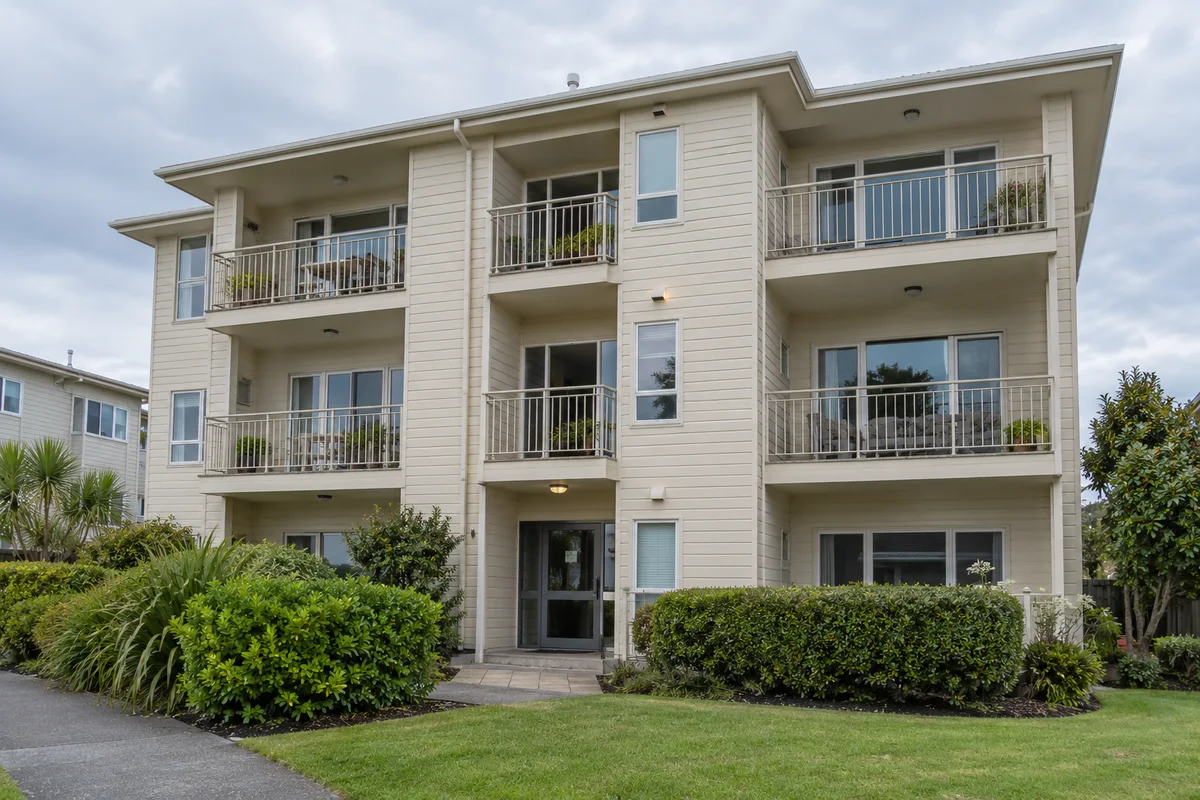
Unit enquiry
Tell us the building, the floor, the rooms involved and which surfaces are inside the unit. Share what the body corporate has said about work and colours, with photos of the rooms.