
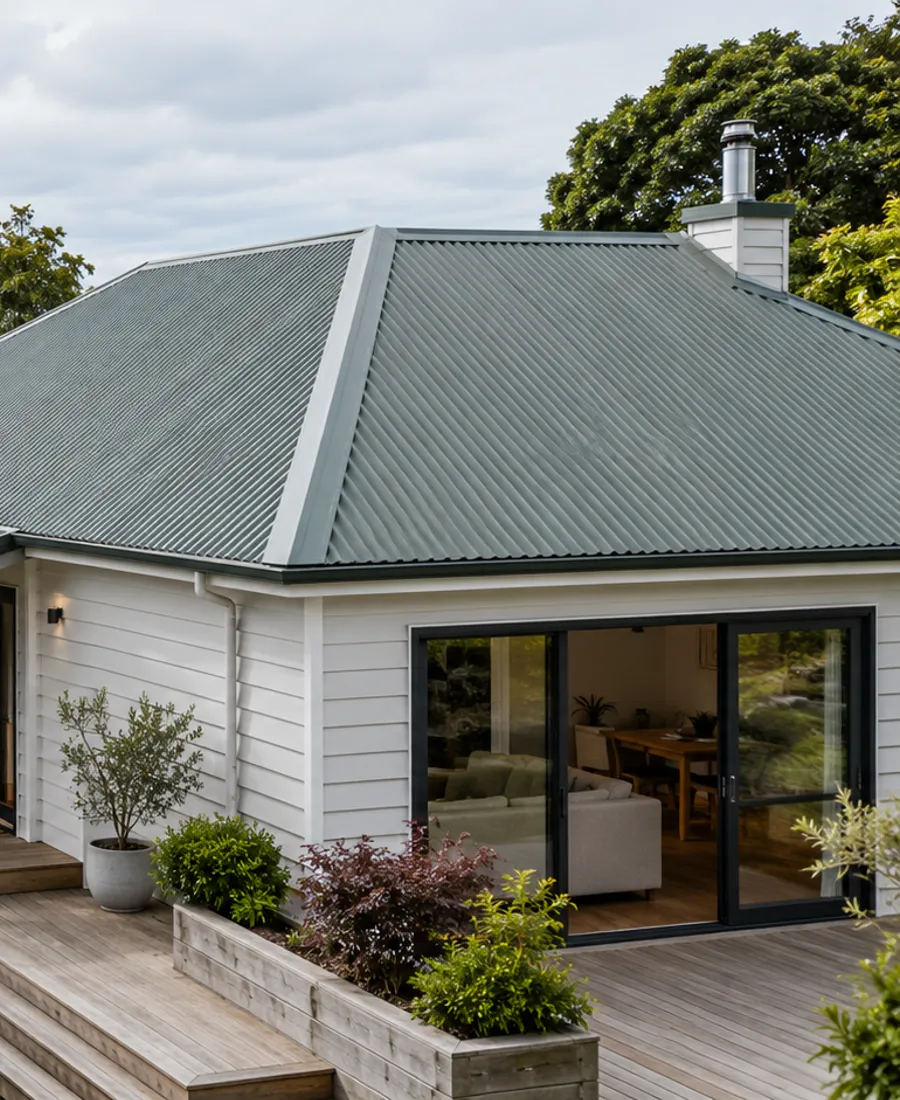
Before
Agree the wind rule
Ask how the work changes on a breezy day: which tasks pause, which carry on and who makes the call. Ask how the coating will be applied too, because spraying and brushing carry different drift risks.
Auckland / North Shore
Thoughtful preparation. A considered finish. Start with a conversation about your property.
Start with the surface
Planning Roof Painting Bayswater starts with understanding your own roof rather than choosing a colour alone. Metal and concrete tile surfaces can need different preparation, and the existing coating, visible wear and repair history all matter. Tell us whether the roof is fading, flaking or showing signs of damage so the enquiry can focus on the work your property needs.
For a home, rental or shared building in Bayswater, access and approval arrangements are part of the conversation. Include the number of storeys, any shared driveway or body corporate requirements, and photographs taken safely from the ground. Preparation, repair needs and a compatible coating system should be clear before work is agreed. Use the form to describe your roof, or call to discuss an assessment and a practical next step.
Harbour breeze
A harbour breeze is pleasant on the deck and awkward on a work day. Fine mist, dust and wash water travel with it, so the plan should say what happens when the wind changes.
Ask how the work changes on a breezy day: which tasks pause, which carry on and who makes the call. Ask how the coating will be applied too, because spraying and brushing carry different drift risks.
Washing lines, open windows, cars and a neighbour's deck can all sit in the path of dust, mist or wash water. Move what you can, and ask for the rest to be covered before work begins.
Once the roof is done, walk the fence line and the ground below the eaves with whoever ran the job. Look for flecks of coating, residue on glass or paving and anything that should have been covered. Raise it that day.
Terms on a quote
Roof quotes lean on a handful of trade words. Knowing them makes two proposals easier to compare, and makes a missing line easier to spot.
Along the harbour edge
Neighbouring suburbs raise the same questions with a different local slant. The service pages go further into each job.
A harbour-edge peninsula where sloping sections and narrow access come up, useful if your own approach to the house is tight.
Between the harbour and Takapuna, with older and newer homes side by side, so the exterior-planning notes may suit a house like yours.
Many older villas and bungalows, so it deals closely with old coatings, which helps if you suspect yours has several layers.
Covers matching the clean to the roof material and where the wash water goes, which matters when downpipes feed a tank.
Clear gutters carry roof water to the downpipes and the tank, and this covers what to look for from the ground.
The full walk-through of assessment, preparation and topcoat for a roof that is sound enough to coat.
Neighbour notice
Quiet streets notice things. A van on the verge, wash water at a boundary or a few days of unfamiliar noise can surprise an adjoining household that was never told. A short note or a chat over the fence heads most of that off.
Say roughly when, what to expect and how to reach you. Mention that dates may shift with the weather, and ask whether they have washing out, windows open or a car under the eaves. If access runs along a shared driveway or fence line, settle that with the neighbour before the first day.
Concrete tile
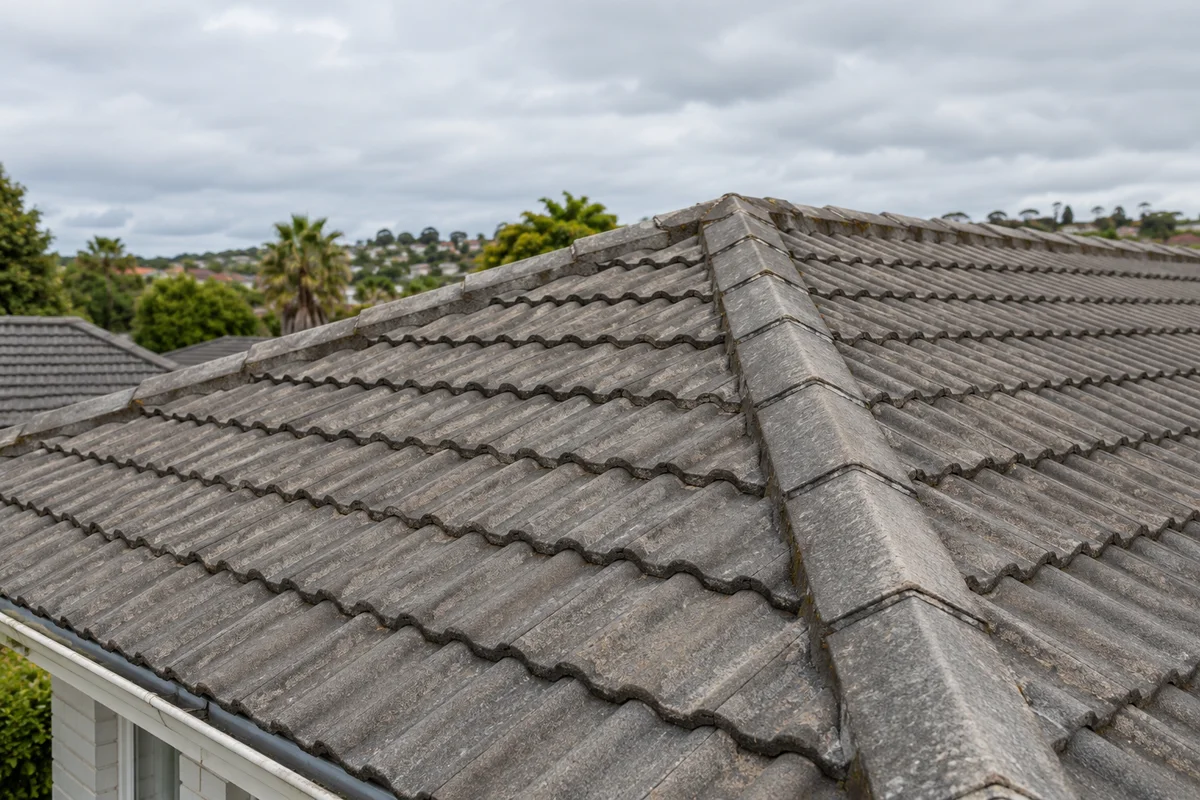
Concrete tiles are tougher than they look, and they still need an honest assessment. Their texture holds dirt and growth, their overlaps trap debris, and a coating only bonds well to a clean, sound surface. Cracked or slipped tiles need repair before any colour goes on, because paint does not hold a tile in place.
Reason for calling
People contact a roof painter for different reasons, and the reason usually points to where the conversation should start.
| Aspect | Usually starts with | Worth confirming |
|---|---|---|
| The colour has faded | A condition check, then cleaning and a compatible recoat if the roof is sound. | Whether the surface is only dull or is chalking and breaking down. |
| Green growth in shaded areas | Roof cleaning matched to the material, with the cause of the damp noted. | How runoff is handled, and whether a coating is needed afterwards. |
| Flaking or peeling coating | Finding out why it lifted before anything is removed or repainted. | How loose coating comes off and what primer goes over bare patches. |
| Rust marks or stained eaves | A repair assessment first, since paint alone will not stop a failing fixing or sheet. | Which repairs sit inside the quote and which are priced separately. |
Roof-to-water chain
If your roof feeds a rainwater tank, work on the roof touches more than the roof. Cleaning water, loose coating and dust all follow the same route as the rain.
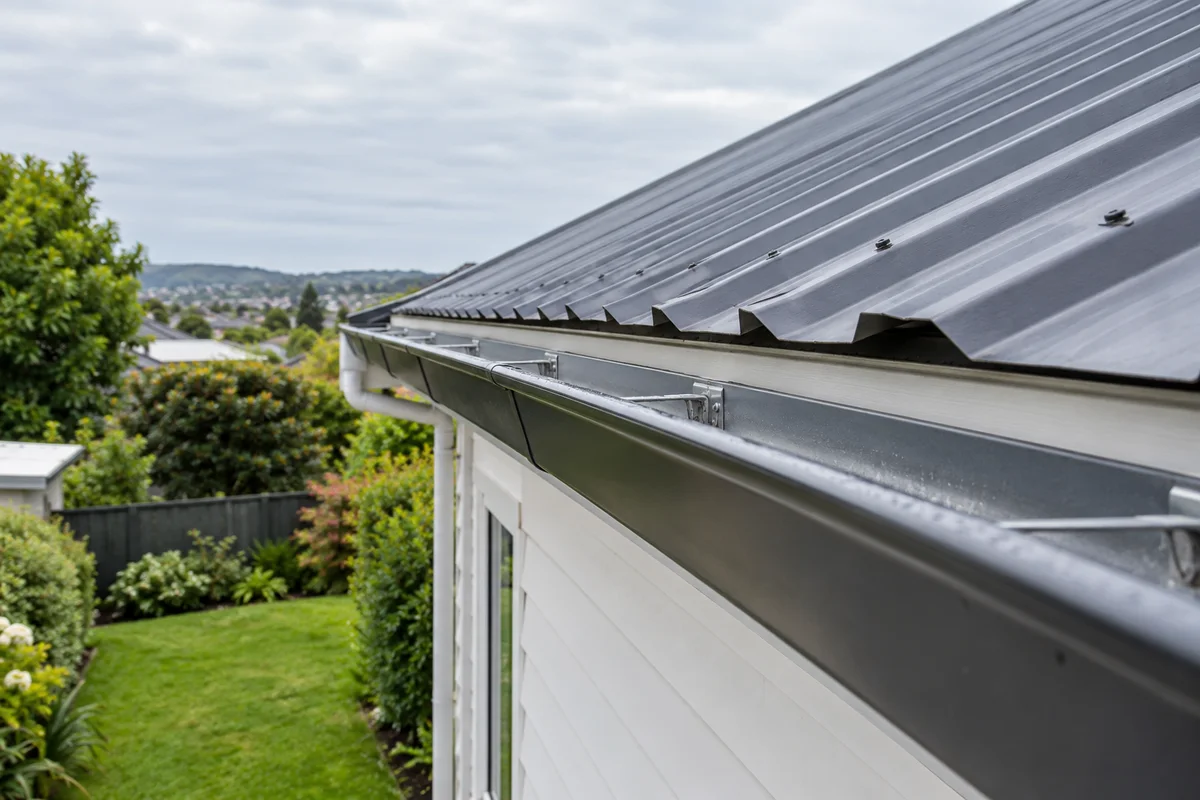
Where cleaning starts and where runoff first collects. Ask how the edge is protected while it is washed.
Debris and flaked coating settle here first. Ask whether the gutters are cleared once the roof is finished.
The narrowest point in the chain, and the place to ask about temporary covers or diversion during washing.
Say if a tank is connected. Ask when it is safe to collect roof water again after cleaning and coating.
Bayswater roof enquiry
Send the address, the roof material if you know it and photographs taken from the ground. Mention a connected rainwater tank and any shared driveway so access and runoff are planned from the start.